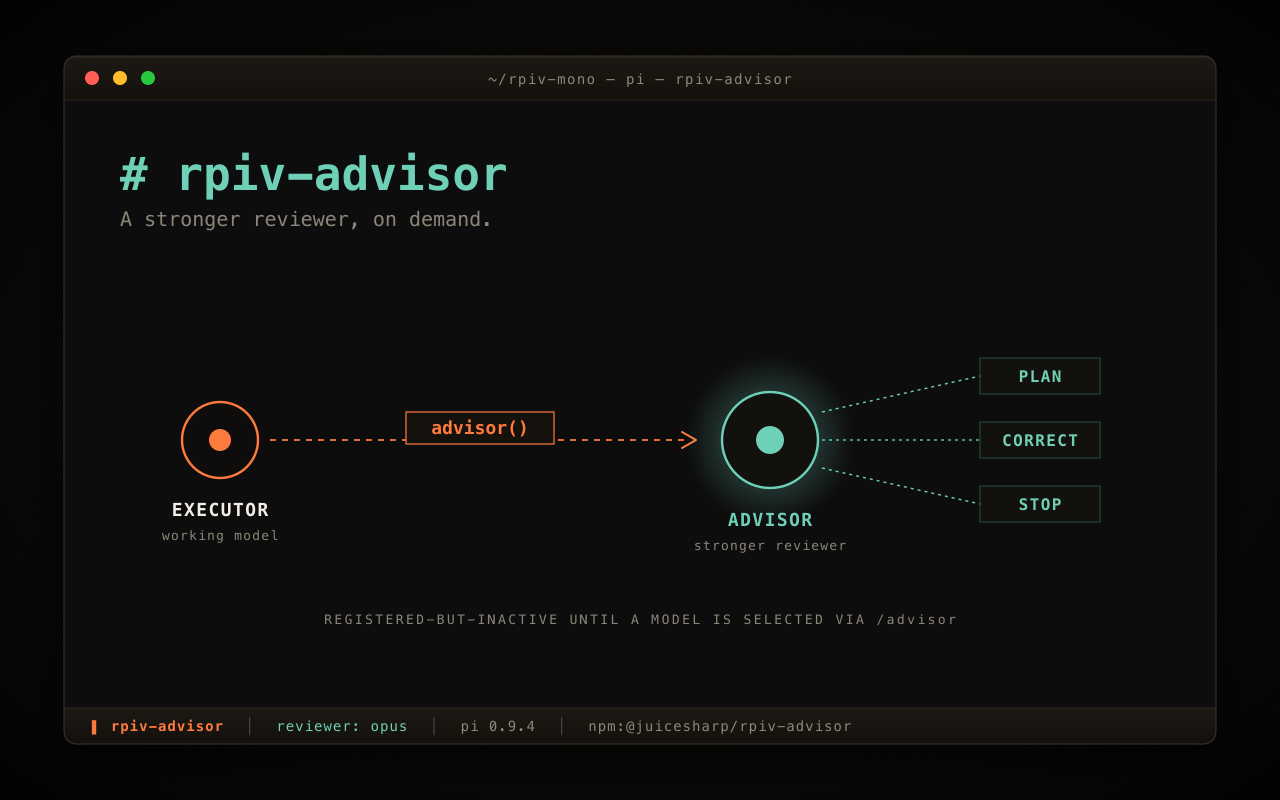
Let the model ask a stronger model for a second opinion before it acts. rpiv-advisor adds the advisor tool and /advisor slash command to Pi Agent - the working model can hand the full conversation to a reviewer (e.g. Opus) and resume with its plan, correction, or stop signal.
-
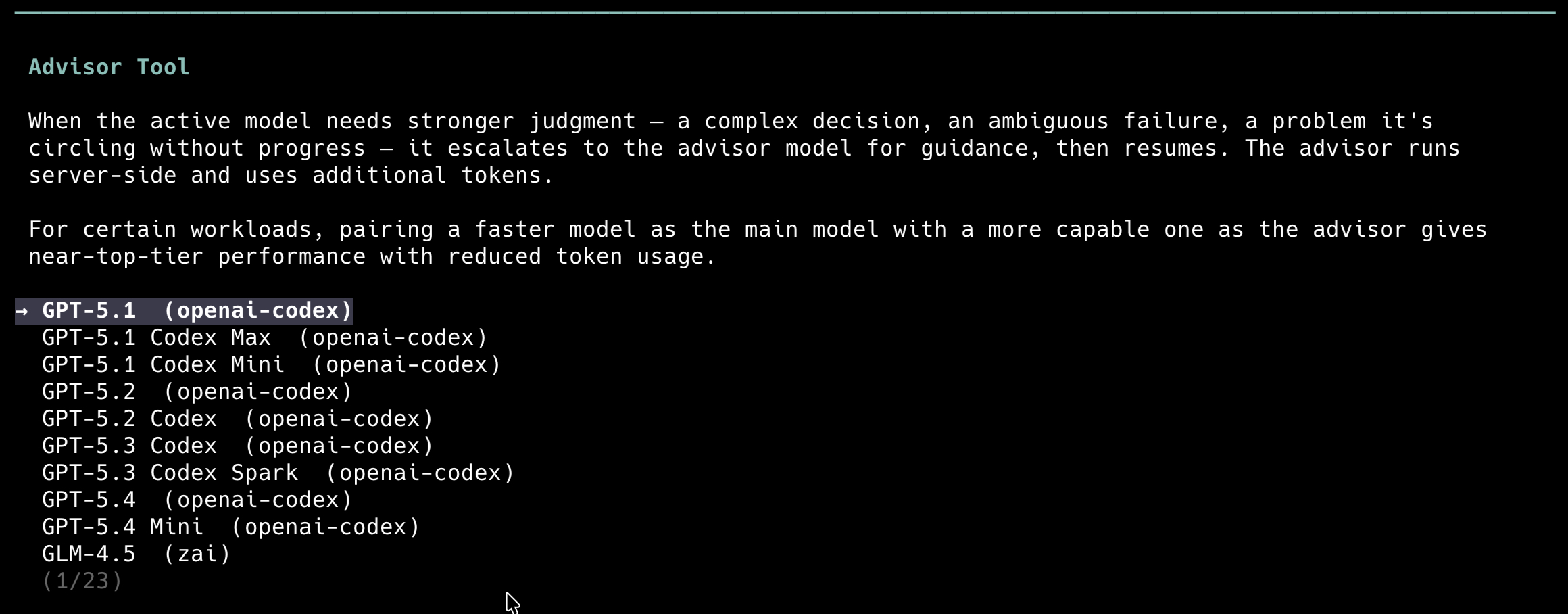
Reviewer model selector -
/advisoropens a picker over any model in Pi's registry, plus a reasoning-effort picker for reasoning-capable models. Start typing to fuzzy-filter the list by model name orprovider/id. -
Persisted across sessions - selection saved at
~/.config/rpiv-advisor/advisor.json(chmod 0600). -
Off by default - the
advisortool is excluded until you pick a model; choose "No advisor" to disable. -
Per-executor blocklist - list executor models in
disabledForModels(inadvisor.json) to strip theadvisortool when those models drive the session. Entries can be plain strings (block at any effort) or{ "model": "<provider:id>", "minEffort": "<level>" }to block only when the executor's effort meets or exceeds the threshold. Available levels, lowest to highest:minimal,low,medium,high,xhigh. -
Zero-parameter handoff - calling
advisorforwards the full serialized conversation branch; no manual prompt needed.
pi install npm:@juicesharp/rpiv-advisorThen restart your Pi session.
Configure an advisor model with /advisor - the command opens a selector for
any model registered with Pi's model registry, plus a reasoning-effort picker
for reasoning-capable models. Selection persists across sessions at
~/.config/rpiv-advisor/advisor.json (chmod 0600).
The advisor tool is registered at load but excluded from active tools by
default; selecting a model via /advisor enables it. Choose "No advisor" to
disable.
advisor takes zero parameters - calling it forwards the full serialized
conversation branch to the advisor model, which returns guidance (plan,
correction, or stop signal) that the executor consumes.
-
advisor- escalate the current conversation branch to the configured reviewer model. Inactive until a model is selected via/advisor.
advisor() // zero parametersThe full conversation branch is auto-serialized from ctx.sessionManager - the LLM does not (and cannot) pass it explicitly.
Returns:
{
  content: [{ type: "text", text: string }], // reviewer's guidance, or error message
  details: {
    advisorModel?: string,        // "<provider>:<modelId>"
    effort?: ThinkingLevel,       // reasoning effort, when applicable
    usage?: Usage,                // token usage from the side-call
    stopReason?: StopReason,      // pi-ai stop reason
    errorMessage?: string,        // populated on auth/abort/error/empty paths
  }
}

MIT